
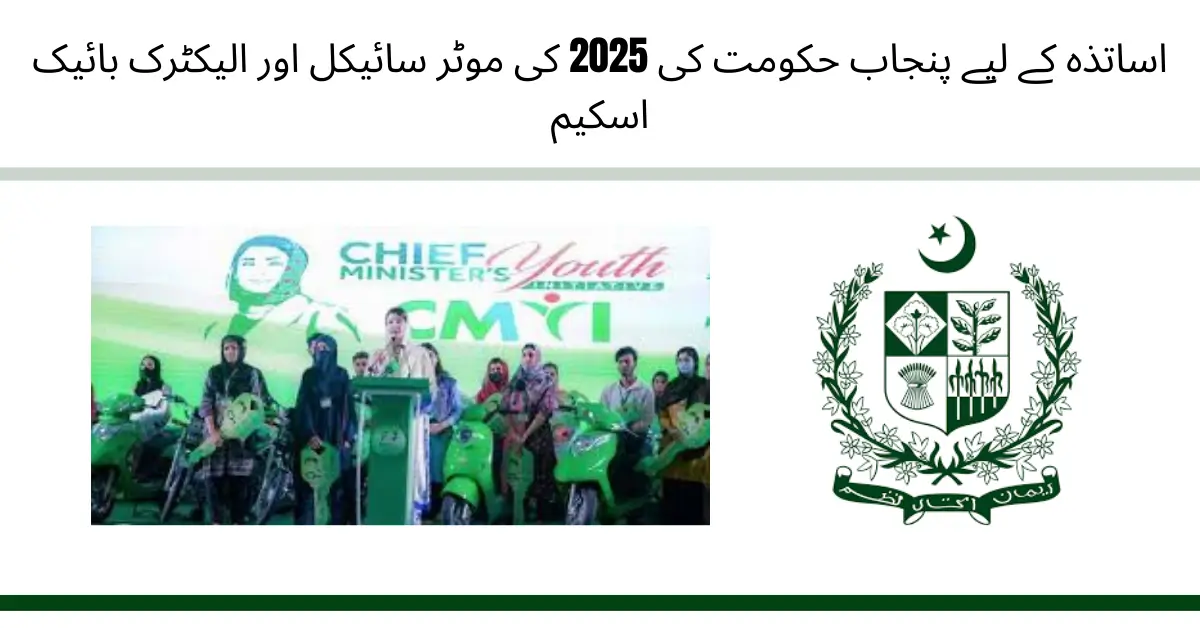
In 2024–2025, the Punjab government introduced a programme to distribute electric bikes (e‑bikes) to teachers. The goal is to help educators with transportation, especially given rising fuel costs, and also to encourage greener commuting options.
Read Also: Health Card Scheme Expands Insurance Integration Revealed
Key Details & Phases
Here is how the scheme is structured:
- Number of Bikes: A total of 15,000 electric bikes are to be distributed among teachers across Punjab.
- Phases: The rollout happens in phases:
- First phase: 5,000 e‑bikes.
- Subsequent phases will cover the remaining 10,000.
- Why Electric: The move to electric bikes is being made to address high petrol costs and to reduce environmental pollution.
Eligibility & Selection Criteria
While not all details have always been fully clear, what is known includes:
- Teachers of the province: Teachers employed in public schools in Punjab are eligible.
- Merit / Point System: For related schemes (e.g. “free e‑bike scheme for women teachers”), a point‑based evaluation is used, taking into account distance from school to home, family status (widowed, divorced), husband’s location, etc.
- Other factors: Seniority, educational qualifications, possession of a driving license have been mentioned in some reports as contributing to eligibility / priority.
Benefits & Impacts
Some of the expected benefits:
- Cost savings: Teachers spend less on commuting, especially with rising fuel prices.
- Environment: Electric bikes reduce carbon emissions relative to petrol‑fuelled ones.
- Access: Easier transport for teachers in rural or remote areas; reduced burden for those who travel far.
- Women’s empowerment: In some districts, there are schemes specifically to provide free e‑bikes to female teachers to make commuting safer and more convenient.
Challenges & Things Not Fully Clear
There are some open questions and challenges:
- Payment / Financing Plan: Many reports say that full details of payment or installment plans are not yet revealed.
- Distribution timeline: When each phase starts & ends, exact deadlines are sometimes vague.
- Logistics & maintenance: Issues like where to charge the e‑bikes, repair facilities, battery replacement over time, etc., are important but less detailed in announcements.
- Fair selection: Ensuring transparency in who qualifies, how priority points are applied, and how bikes are allocated is crucial.
Example: Free E‑Bike Scheme for Women Teachers (Punjab)
A specific variant: Punjab has announced a free e‑bike scheme for women teachers, especially those in remote areas. The selection uses a point system based on:
- Distance from home to school (e.g. more points per km)
- Family circumstances: widow/divorced, husband abroad, etc.
- Educational qualification, seniority, driving licence also contribute.
This shows the government is trying to prioritize those who face the most hardship.
Why This Matters
- Economic Relief: Teachers often have fixed, modest salaries. With fuel prices rising, commuting can be a significant expense. This scheme helps reduce that burden.
- Boost to Education Access: If teachers can reliably travel to their schools, particularly in remote areas, it can improve attendance, morale, and quality of education.
- Environmental Benefit: Pakistan, like many countries, faces concerns about air pollution, carbon emissions, and dependence on imported fossil fuels. Promoting electric mobility helps mitigate these.
- Promoting Equality: Women teachers, or those in less well‑off circumstances, benefit especially under such schemes, improving gender equality and social inclusion.
Recommendations & What Teachers Should Do
If you are a teacher interested in the scheme, here are practical steps & tips:
- Check Official Announcements
Watch for notices from the Punjab School Education Department, Education Ministry, or district education officers. They will publish details about application windows, required documents, eligibility. - Gather Documents Early
Likely needed: CNIC, proof of employment, proof of qualification, driving license (if required), proof of distance from school/home. - Calculate Your Eligibility
If there is a point system (distance, family status, seniority), estimate how many points you might get. If some items (license, qualifications) you can update, do so before applying. - Budget for Accessories / Maintenance
Even if the bike is free or subsidised, you may need to pay for helmet, maintenance, charging (if e-bike), etc. It helps to check what support is provided and what you’ll have to cover. - Understand the Terms
Is there an installment? Ownership after some time? Restrictions (such as not being allowed to sell before fully owning)? These affect your long‑term benefit. - Stay Informed About Roll‑Out Phases
If you miss one phase, there may be others. Sometimes applications open, then selection, then distribution.
Conclusion
The 2025 e‑bike/ bike scheme for teachers in Punjab represents a positive move towards reducing transportation burdens, promoting sustainable transport, and ensuring more equitable opportunities—especially for teachers in rural or difficult areas, and for women educators. While many details are promising, success will depend on transparent implementation, clarity about eligibility and payments, and support for maintenance and infrastructure.
FAQs – Bike / E-Bike Scheme for Teachers in Pakistan 2025
Who is eligible for this scheme?
The scheme is primarily for government school teachers in Punjab, both male and female. In some sub-programs (like for women teachers), priority is given to:
Female teachers
Teachers in rural or remote areas
Those who travel long distances to school
Widows, divorced women, or those whose spouse is abroad
How many bikes will be distributed?
The Punjab government aims to distribute 15,000 electric bikes in total. The distribution is planned in phases, starting with the first 5,000.